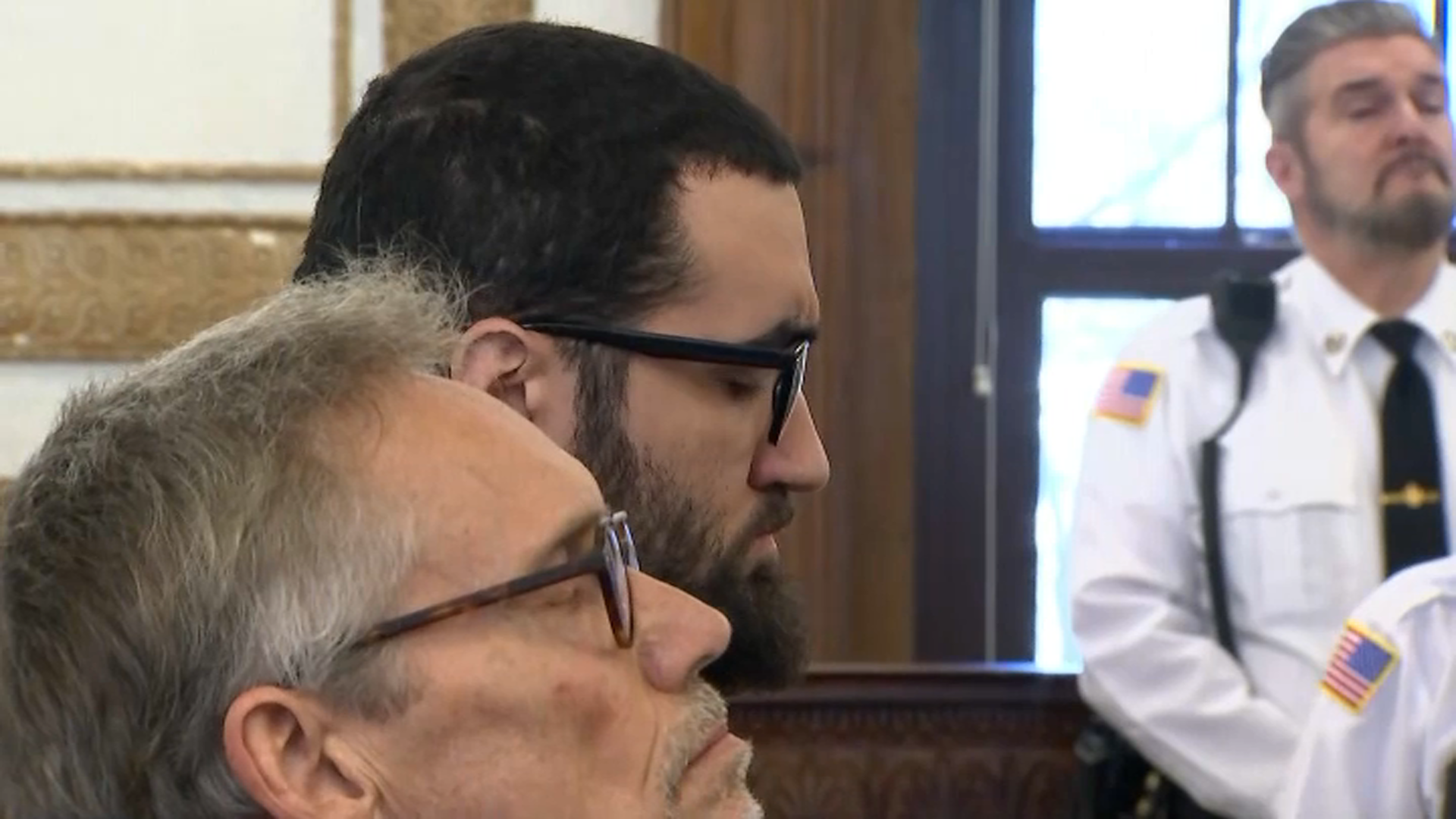
Two former New Hampshire college student-athletes were the victims of a murder-suicide in Miami, with the suspect shooting the women before turning the gun on himself.
Meghan Moore, 25, of Centerville, Mass. and her roommate, 23-year-old Sidney Cap…
Your Hometown Radio
by
Two former New Hampshire college student-athletes were the victims of a murder-suicide in Miami, with the suspect shooting the women before turning the gun on himself.
Meghan Moore, 25, of Centerville, Mass. and her roommate, 23-year-old Sidney Cap…
by
For better or worse, artificial intelligence is part of our world. Each day, A.I. software is learning new skills, whether it’s answering questions, writing stories or generating images.
But for Gov. Maura Healey, the focus is on the future of A.I. and how Massachusetts can play a role in those advancements.
“Nobody has owned how you’re going to take that A.I. and use it to help people cure diseases, solve problems and address infrastructure,” Healey said.
To grow that idea, the governor is proposing $100 million for an Applied AI Hub, part of her broader Mass Leads Act, and putting in place a task force to oversee where those funds would be used.
The goal is to spur progress in the field, Technology Services and Security Secretary Jason Snyder said.
“Really focusing on how A.I. can help industries such as life sciences, health care, finance, higher education for Massachusetts,” Snyder said.
For experts, though, they’re urging caution, especially when it comes to specific categories like health care.
“I think we need to be smart in how it’s implemented,” said University of Massachusetts Amherst professor Przemyslaw Grabowicz. “It needs to be transparent technology, it has to be explainable and we need discussion on the goals.”
Get updates on what’s happening in Boston to your inbox. Sign up for our News Headlines newsletter.
Snyder said those concerns are front of mind as the state moves forward: “Working through usage to better understand what are the risks of AI, what are the real things, staying away from fear.”
The A.I. Task Force was put in place by executive order and will be looking into those different industries, where state funds can best be used and prioritizing job creation throughout the process.
by
If you’re a fan of Korean pop music like BTS or BLACKPINK or cinema and dramas like Parasite and Squid Game, you won’t want to miss the first major exhibition to focus on South Korean pop culture and its worldwide influence.
“Hallyu! The Kore…
by
Several birds were found dead on Short Beach in Nahant, Massachusetts, earlier this month, officials said in a public health announcement.
The birds are suspected of having Highly Pathogenic Avian Influenza, the Massachusetts Division of Fisheries…
by
An antisemitic “Zoombombing” incident interrupted a town meeting in Concord, Massachusetts, last week, according to town manager Kerry Lafleur, the latest in a series of these incidents.
The incident occurred at a regularly-scheduled me…
by
The housing lawsuit waged against the Town of Milton by Massachusetts Attorney General Andrea Campbell is set to be heard by the state’s highest court later this year, the Boston Globe reports.
The lawsuit, filed in the Supreme Judicial Court last month, seeks to punish Milton for voting against the MBTA Communities Law, which states that any city or town served by the MBTA must create new zoning for multi-family housing near transit stations and doesn’t allow towns to opt out. In Milton, the zoning change would add almost 2,500 housing units.
As a result of Milton’s noncompliance, the town will no longer be eligible for recent housing and infrastructure grants, as well as many future state funding programs.
The decision is, in part, a win for the attorney general, who hopes to get a ruling on the matter as soon as possible to prevent delays in other towns’ zoning planning efforts. Sending the law to the state’s highest court rather than Land or Superior Courts will expedite the legal process, leave little room for subsequent appeals and provide definitive answers on the matter, shaping state-wide land-use laws for years to come.
Though zoning regulations in Massachusetts have historically been decided by individual municipalities, Campbell cited a 1973 court ruling in her lawsuit that states “the Legislature has retained ‘supreme power in zoning matters’ as long as it acts in accordance with the Home Rule Amendment,” which, she claims, it has.
“I believe that this case raises novel questions of law which are of public importance, and which are time sensitive and likely to recur, i.e. the scope of a municipality’s legal obligations under [the MBTA Communities Act],” Justice Serge George Jr. wrote in his ruling.
Despite efforts from Campbell’s office and local housing advocacy groups to have the case heard in May, Georges scheduled oral arguments for October, meaning the verdict may come during or after this year’s Town Meeting seasons, when roughly 130 municipalities are scheduled to consider zoning changes that the MBTA Communities Law requires be finalized by the end of the year. Many of those towns, like Wrentham, are seeing a growing resistance to the law, the Statehouse News Service reported.
Depending on how the SJC rules, the timing of the verdict could leave many towns with little time to respond.
“Without a decision from the court sufficiently early in this calendar year, impacted municipalities will have no clear direction as to how to proceed with critical local decisions related to this statue,” the Massachusetts Association of Regional Planning Agencies wrote in a letter to Georges last week. “Any delay on this court’s part could impact the progress made by municipalities who are already trying to comply with the law.
Georges, however, appeared to side with attorneys representing the Town of Milton, who argued that accelerating the suit would force the town to compile a hasty, incomplete legal defense. He also wrote that the SJC may not have time to hear the case in May due to a series of ballot questions the court must answer ahead of the coming elections.
Milton had previously passed a state-approved zoning change plan, but residents concerned with excess development prompted a referendum last month, in which a majority voted to strike the plan.
WPKZ 105.3FM/1280AM
762 Water Street | Fitchburg, MA 01275 | 978.343.3766
EEO | FCC Quarterly Report | Contest Rules
© 2019 WPKZ | Website Development: Insight Dezign