[This story first appeared on Boston Restaurant Talk.]
It looks like another location of a group of Cajun seafood restaurants has closed.
According to a source, Shaking Crab in Brookline is no longer in business, with a check on the website…
Your Hometown Radio
[This story first appeared on Boston Restaurant Talk.]
It looks like another location of a group of Cajun seafood restaurants has closed.
According to a source, Shaking Crab in Brookline is no longer in business, with a check on the website…
One in five Bay Staters envisions themselves leaving Massachusetts for another state within the next five years, according to a new poll that found a sizable majority of residents burdened by high housing costs.
More than seven in 10 residents surveyed by the MassINC Polling Group said the amount they pay on housing each month is “somewhat of a burden” (34%) or a “very big burden” (37%). Eighteen percent of those polled answered housing when asked to name the single biggest issue facing state government, tied for the highest share with migrants and immigration.
And when pollsters asked if participants saw themselves moving in the next five years, 21% said they could see themselves leaving Massachusetts altogether.
Among residents who said both their housing and transportation costs pose a “very big” burden, 38% are thinking about leaving Massachusetts in the next five years, a higher share than the overall population, pollsters found.
The results are unlikely to come as a surprise on Beacon Hill, where lawmakers are facing pressure from constituents, business leaders and interest groups to boost the housing supply and deliver more affordable options. Previous efforts have done little to slow the trend of rising prices, and lawmakers hope that more state borrowing alongside some policy reforms will finally unlock much-needed production.
MassINC conducted the poll on behalf of advocacy group Transportation for Massachusetts, which has long pushed for more state investment into public transit. Pollsters surveyed 1,408 Massachusetts residents between June 12 and June 30, and they oversampled 300 residents of so-called Gateway Cities and 100 residents of Boston’s Mattapan and Hyde Park neighborhoods.
“The high cost of housing is the biggest crisis facing Massachusetts families — especially renters who are struggling to get by amid skyrocketing rents and high transportation costs,” Rose Webster-Smith, executive director of Springfield No One Leaves and a co-anchor of Homes for All Massachusetts, said in a statement MassINC included with its poll results. “Our state’s housing and transportation systems are failing to meet the basic needs of Massachusetts families, and status quo solutions won’t fix them.”
On the transportation front, 41% rated the state’s system in “fair” condition. Five% called it “excellent,” 28% called it “good” and 25% called it “poor.” Forty-seven percent of respondents said the public transit near where they live is good enough that they can rely on it, compared with 38% who said it’s insufficient.
Respondents were most likely to give Gov. Maura Healey and lawmakers middling grades on transportation. About a third rated Healey’s work on transportation a “C,” the highest share of any letter grade, and the same was the case for their review of how the Legislature has funded transportation infrastructure.
Participants were also most likely to see a status quo at the MBTA under General Manager Phil Eng, who started on the job in April 2023. Twenty-two percent said they think the T is getting better during his tenure, 17% said they think it’s getting worse and 43% see the agency “about the same as it has been.”
One major transportation reform that’s on the verge of becoming law appears to have broad appeal. The House and Senate voted as part of their compromise fiscal 2025 state budget to fund fare-free trips at all of the state’s 15 regional transit authorities (but not the MBTA), and nearly three-quarters of the residents polled by MassINC strongly or somewhat support the idea.
Pollsters found respondents were more likely to support than oppose a range of strategies to generate new funding for transportation projects, or at least to examine the options.
They told participants that in London and Paris drivers pay a fee to enter central business districts, and recounted the history of New York Gov. Kathy Hochul pausing congestion pricing in New York City on the eve of its launch. Asked if Massachusetts should study “ways to use congestion pricing to reduce traffic and raise money for public transit in and around Boston,” 50% said yes and 36% said no.
Another question noted that other states allow cities and towns to vote on whether to raise local taxes for transportation projects, but Massachusetts does not. Sixty-eight percent of residents said the Bay State should allow local votes on local taxes for transportation, compared to 19% who said no.
Forty-seven percent said businesses with “a certain number of employees” should pay a payroll tax to help cover commuting costs, compared to 35% who opposed that idea, and 58% backed real estate developers paying part of the transportation costs near projects they build, compared to 25% who do not want that.
Those ideas and many others to overhaul how government pays for transportation appear all but certain to remain on Beacon Hill’s backburner until at least next year. No major action on new transportation revenues is expected this legislative session, although the Legislature this year may decide how to allocate a surplus of income surtax funds on education and transportation initiatives.
“This survey confirms that housing and transportation are not separate issues; they are deeply interconnected,” said Transportation for Massachusetts Executive Director Reggie Ramos. “Residents are experiencing these as combined, intersecting crises. Housing affordability and transportation connectivity to opportunities impact quality of life and can exacerbate inequality. Our public officials must take steps to solve them jointly and immediately.”
The poll’s margin of error is plus or minus 3.2 percentage points.
Our unsettled weather pattern has settled right in with scattered rain chances through Thursday.
Our humidity has increased again as well, while temperatures will remain in the 70s for most through Wednesday, thanks to an onshore flow.
…
Jack Connors, a Boston philanthropist, advertising magnate and political powerbroker, died Tuesday of cancer, according to The Boston Globe.
His death prompted an outpouring of tributes from politicians to business and religious leaders.
“Massachusetts lost a champion today and I have lost a friend,” Massachusetts Gov. Maura Healey said. “Jack Connors was a leader in business, but his most lasting legacy will come from his generosity and philanthropy. Jack spent his life trying to make Massachusetts and this country a fairer, more inclusive place – and he succeeded. From the creation of Camp Harbor View to his advocacy for education, health care, and community, Jack’s legacy will live on through the countless lives he transformed. We all owe Jack Connors an enormous debt of gratitude. My deepest condolences go to his wife, Eilleen, his children, his grandchildren, and his many devoted family members and friends.”
Cardinal Sean O’Malley also issued a statement praising Connors’ “life of civic leadership and Christian generosity.”
“Jack Connors has gone to God and left us all with the legacy of a life lived in the service of others,” he added. “To his wife Eileen, to his four children and their spouses, and his thirteen grandchildren I extend my prayers and consolation.”
“The tributes to Jack’s legacy will undoubtably come from many sources, commending his leadership in the world of commerce, his vision of what a good society should be, and his seemingly endless generosity to others. When I first came as Archbishop of Boston, Jack offered his assistance, a gift which has been of enormous value to the Church and to me personally over the past twenty years.”
“We have lost a great friend and a great leader of our common life in Greater Boston, but we are a better community of neighbors, friends, and citizens because he lived and worked among us for so long. May he rest in peace and may his legacy be continued.”
Connors was one of the founders of the advertising firm Hill, Holiday, Connors, Cosmopulos, served on numerous boards and helped create Camp Harbor View, a summer program for middle-school kids from some of Boston’s poorest neighborhoods.
He was also an advisor and fundraiser for some of the state’s most prominent politicians, including Healey, former Massacusetts Gov. Charlie Baker, former Boston mayors Thomas Menino and Marty Walsh, and current Mayor Michelle Wu.
Connors said in a 2018 interview with the Boston Business Journal that when he looks back on his life, he feels that he “won the lottery.”
“There’s nothing to indicate that anybody ever nominated me most likely to succeed,” he said in the interview. “And, so, I like to think that most of my life at the moment is helping people who could use the help.”
Connors leaves behind his wife, a daughter, and three sons, among other family members. Funeral arrangements have yet to be announced.
TD Bank plans to close seven branches in Massachusetts, including two in Boston.
In a federal regulatory filing, TD Bank listed two branches in Boston, and one each in Belmont, Brewster, Burlington, Lexington and the village of Pocasset i…
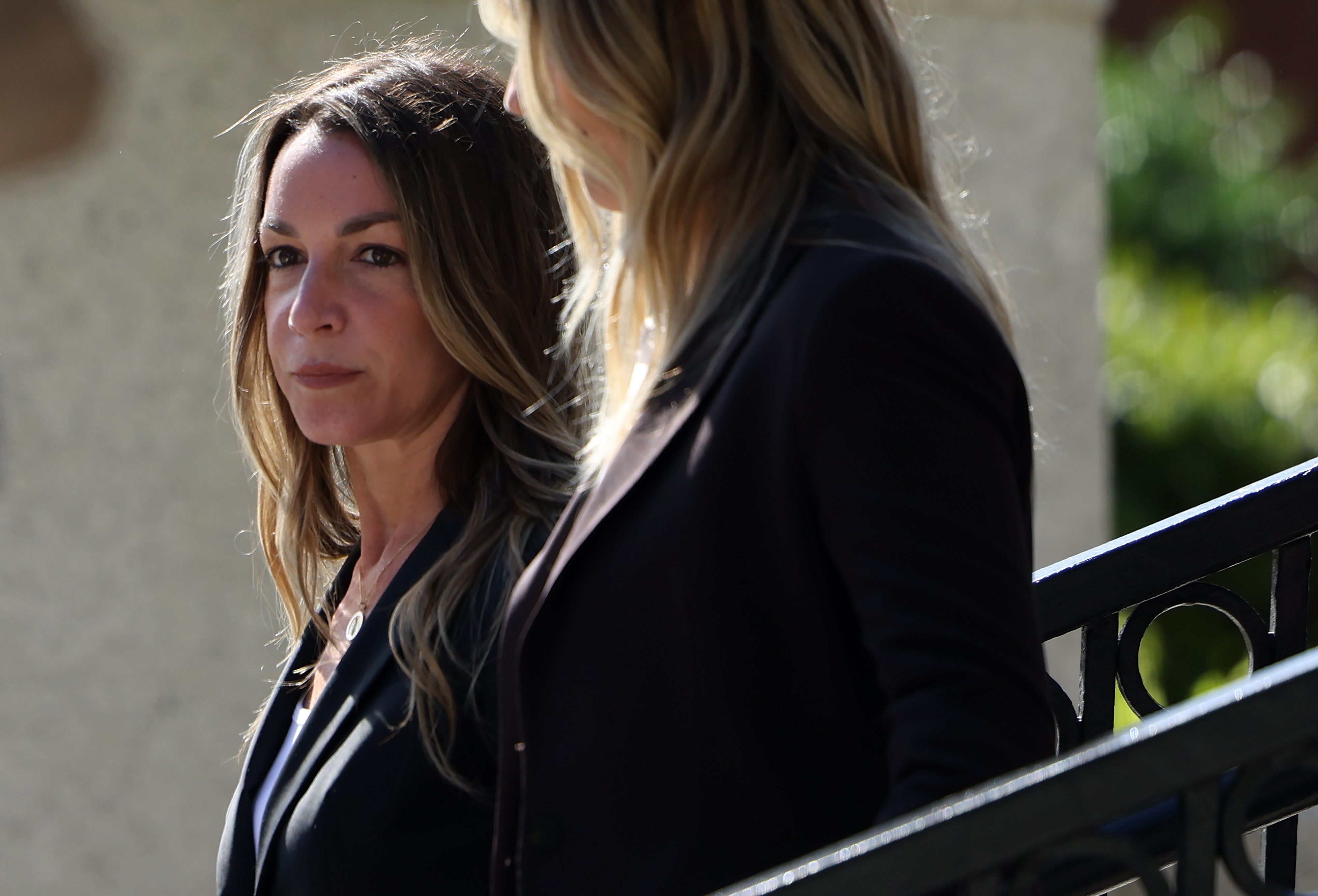
Karen Read made a brief court appearance on Monday to set dates going forward for the high-profile murder case against her involving her Boston police officer boyfriend that ended in a mistrial earlier this month.
Read is accused of ramming into John O’Keefe with her SUV and leaving him for dead in a snowstorm in January 2022. Her two-month trial ended when jurors declared they were hopelessly deadlocked and a judge declared a mistrial on the fifth day of deliberations.
The judge will hear oral arguments on a defense motion to dismiss two of the three charges against her on Aug. 9, and a retrial was scheduled for Jan. 27. The court hearing lasted under five minutes.
Here’s what we learned Monday about the new timeline for the case, and what a second trial could look like:
The next hearing in the case will be on Aug. 9, when Judge Beverly Cannone said she will hear oral arguments from both sides on the defense’s motion to dismiss the second-degree murder and leaving the scene of a collision causing death charges.
The defense contends that five jurors have come forward to say that the jury unanimously reached a not guilty verdict on two of the three charges against Read, including murder. The jurors reported being deadlocked only on the remaining charge of manslaughter while operating a motor vehicle under the influence of alcohol and trying her again for murder would be unconstitutional double jeopardy, they said.
“It speaks volumes that nobody has come forward to contradict what they said,” defense attorney David Yannetti said outside of court Monday.
The defense also argues Cannone abruptly announced the mistrial without questioning the jurors about where they stood on each of the three charges Read faced and without giving lawyers for either side a chance to comment.
Once Cannone rules on the motion to dismiss, she said she fully expects an appeal to be filed. To provide time for that appeal to be resolved she suggested scheduling the retrial for Jan. 27, 2025, which happens to be two days before the third anniversary of O’Keefe’s death. A final pretrial hearing was also scheduled for Jan. 14.
But the Jan. 27 retrial date could still change, as Yannetti said he has another trial starting several weeks before that and he might not be able to juggle both cases at the same time. Cannone said she will reach out to the judge in Yannetti’s other case to see if something can be worked out that would allow the Jan. 27 date to stand.
Two legal experts told NBC10 Boston they think it’s unlikely that either of the charges against Read will be dismissed following the Aug. 9 hearing.
“I think the commonwealth has the stronger leg to stand on in terms of their legal argument,” said Katherine Loftus, a Boston attorney with Loftus & Loftus PC. “Sometimes it’s difficult to differentiate between what it seems would be the most fair and what the law actually requires. What it would require the judge to do if they’re going to call all the witnesses back in to poll the jury is essentialy overstepping the court’s boundaries, and that’s not really what the jury system is about.”
“She probably should have been acquitted on it,” she said of Read. “They should have asked the judge. That they didn’t do that, the law really doesn’t allow us to Monday morning quarterback.”
Michael Coyne, dean of the Massachusetts School of Law, largely agreed.
“Mostly, people say if you’ve got a verdict, let’s figure it out and we’ll go from there. But you really have to think about the sanctity of the jury’s deliberations,” he said. “It’s hard enough to get people to serve on a jury. If you open the door to this where we’re going to quiz you about internal conversations… That’s a no-no, Massachusetts law is clear, unless it’s about racial bias, unless the jury was prejudiced from the outset.”
NBC10 Boston’s Eli Rosenberg said he confirmed Monday with Yannetti that defense attorney Alan Jackson will return for Read’s second trial.
There had been some talk about whether Jackson would be back, and the fact that he was not in attendance for Monday’s hearing only fueled that speculation.
Coyne said he thinks the prosecution will look to pare down its witness list in the second trial. Over 50 witnesses were called by the commonwealth the first time around.
“Trim the case, get the fat out of the case, don’t focus as much on what the defendant’s case is about — the alleged conspiracy and all of that,” he said. “Focus on the details of your case — the excessive drinking, the snowy, snowy night and driving under those conditions and ultimately his death was caused by the defendant, as they see it. That has to be much tighter if they want to get a conviction on vehicular manslaughter.”
Coyne said he thinks the prosecution will bring all three charges again, assuming there is no dismissal, though he believes it would be a better strategy to drop the murder charge and focus on the other two counts.
“Well they’ve definitely got a big job to do as well,” Coyne said, especially since it appears the jury in the first trial was leaning in favor of guilty on the manslaughter charge.
“What they have to do is focus on the reasonable doubt aspect of the case,” he said. “Again, you’ve got a snowy night, accidents happen on snowy nights, you have a scapegoat, as they see it. I wouldn’t pitch the broad conspiracy. I’d make it a scapegoat for sloppy police, assembly of evidence and all the work they did and all the mistakes they made. So it was sloppy, and I think the jury would accept that. I think they’d have an easier time selling a reasonable doubt argument and that she’s a scapegoat as opposed to being framed. It sounds like a technical difference, but I do think that’s a big difference. I’m not sure the jury bought the argument that there was a massive conspiracy here.”